Is Bromley’s Hard Water Quietly Shortening Your Boiler’s Life?
Discover how Bromley’s hard water can contribute to limescale build-up, affect boiler efficiency and potentially shorten your heating system’s lifespan.

Why you can trust our content
We understand that the boiler industry can be confusing, with plenty of outdated or misleading information. That’s why we rely only on trusted, proven sources to guide our advice and installations:


At a glance
Your boiler might be heating your home perfectly well today, but what is happening inside it? In areas with hard water, mineral deposits can gradually build up in parts of the heating system, sometimes affecting efficiency and contributing to faults long before a homeowner notices a problem.
For households in Bromley, understanding the connection between hard water, limescale and boiler performance can help prevent avoidable trouble. Limescale does not automatically mean your boiler is about to fail, but knowing what to look for can help you make sensible decisions about maintenance, repairs and replacement.
Why Is Bromley’s Water a Concern for Boilers?
Hard water contains higher concentrations of dissolved minerals, particularly calcium and magnesium. These minerals are naturally present in water that passes through certain types of rock before reaching homes.
When hard water is heated, some of these minerals can separate and form limescale. You might recognise it as the white, chalky deposit around taps, inside kettles or on shower screens. However, the deposits that form inside a boiler are harder to see and can be more troublesome if they accumulate in the wrong places.
Bromley and the wider South East have areas where hard water is a familiar household issue. The precise hardness level can vary depending on the local supply, so it is worth checking your water supplier’s information for your postcode rather than assuming every property receives water of exactly the same hardness.
In a boiler, the main concern is what happens when mineral deposits begin to interfere with heat transfer or restrict the movement of water. The effect depends on the boiler design, the condition of the system and how much scale has accumulated.
How Does Limescale Affect a Boiler?
Limescale can act as an insulating layer on heat-transfer surfaces. When this happens, heat may not pass into the water as effectively as intended. The boiler may need to work harder to achieve the required temperature, and some components can experience additional thermal stress.
In a combi boiler, the plate heat exchanger is particularly relevant because it transfers heat from the primary heating circuit to the domestic hot water supply. Mineral deposits can restrict the narrow passages inside this component, potentially reducing hot-water performance.
The effects can include:
- Reduced hot-water flow: Deposits may restrict water movement through affected components.
- Inconsistent temperatures: Hot water may fluctuate between warm and hot, depending on the underlying fault.
- Unusual noises: Kettling or rumbling can sometimes occur when localised overheating develops around restricted heat-transfer surfaces.
- Increased energy consumption: Poor heat transfer or an inefficiently operating system may use more energy to deliver the same level of comfort.
- Component problems: Continued overheating or restricted flow can contribute to wear, although the actual cause needs to be established.
It is important to remember that these symptoms are not proof of limescale. Air in the system, faulty sensors, circulation problems, incorrect settings and other component failures can produce similar behaviour.
What Warning Signs Should Homeowners Look For?
The earliest signs of scale-related trouble are often subtle. You may notice that the shower takes longer to reach a comfortable temperature, or that the hot-water flow has become weaker than it used to be.
Other warning signs include:
- Hot water that repeatedly changes temperature during use.
- A boiler that makes a new clicking, banging, whistling or rumbling noise.
- Heating or hot water that works intermittently.
- A noticeable change in hot-water performance despite normal household usage.
- Repeated fault codes or shutdowns that require investigation.
A boiler making a kettling noise does not necessarily have a limescale problem. Similarly, a drop in hot-water flow may originate in a tap, shower valve or pipework rather than the boiler itself.
If your boiler repeatedly loses performance, arranging a professional inspection can help identify the cause before you spend money on the wrong solution.
Contact We Heat London for advice about boiler symptoms and suitable next steps.
Can Hard Water Shorten Your Boiler’s Working Life?
It can contribute to premature wear in certain circumstances, but hard water alone does not determine how long a boiler will last.
The effect depends on several factors, including the amount of scale formation, the boiler’s design, the condition of its components, the quality of the installation and the maintenance it receives.
For example, a boiler that develops scale-related restrictions may experience repeated overheating or reduced heat transfer. If the underlying issue remains unresolved, the affected component may eventually need cleaning or replacement.
However, it would be misleading to suggest that every boiler in a hard-water area will suffer serious damage. Many systems operate for years without major scale-related failures, particularly when they are installed correctly, maintained appropriately and supplied with suitable water treatment where necessary.
The key is to respond to changes in performance rather than waiting for a complete breakdown.
Which Boiler Components Are Most Vulnerable to Limescale?
Not every part of a boiler is equally exposed to scale formation. The risk depends on the water flowing through the component and the temperatures involved.
| Boiler component | Possible effect of limescale | What a homeowner might notice |
| Plate heat exchanger | Restricted passages and reduced heat transfer | Weak or inconsistent hot water |
| Primary heat exchanger | Deposits may affect heat transfer and contribute to localised overheating | Unusual noises or reduced performance |
| Water-carrying valves and passages | Restrictions may develop in affected areas | Changes in flow or temperature |
| Hot-water pipework and fittings | Deposits may build up in susceptible sections | Reduced flow from individual outlets |
A qualified heating engineer can assess whether a component is scaled, damaged or affected by a different problem. This distinction matters because cleaning a component that has already deteriorated may not provide a lasting solution.
What Can You Do to Protect Your Boiler From Hard Water?
The most effective approach is to identify the water conditions, maintain the heating system properly and choose treatment measures that suit the property.
1. Check your local water hardness
Your water supplier may publish hardness information by postcode. This provides a useful starting point for understanding whether limescale prevention deserves particular attention.
A visible build-up on taps and kettles can also indicate hard water, although it cannot tell you exactly what is happening inside your boiler.
2. Keep up with servicing
Regular servicing allows an appropriately qualified engineer to inspect the boiler, check its operation and identify developing issues where possible.
A service does not guarantee that limescale will never form, but it can help distinguish normal operation from symptoms that need further investigation.
3. Ask whether water treatment is appropriate
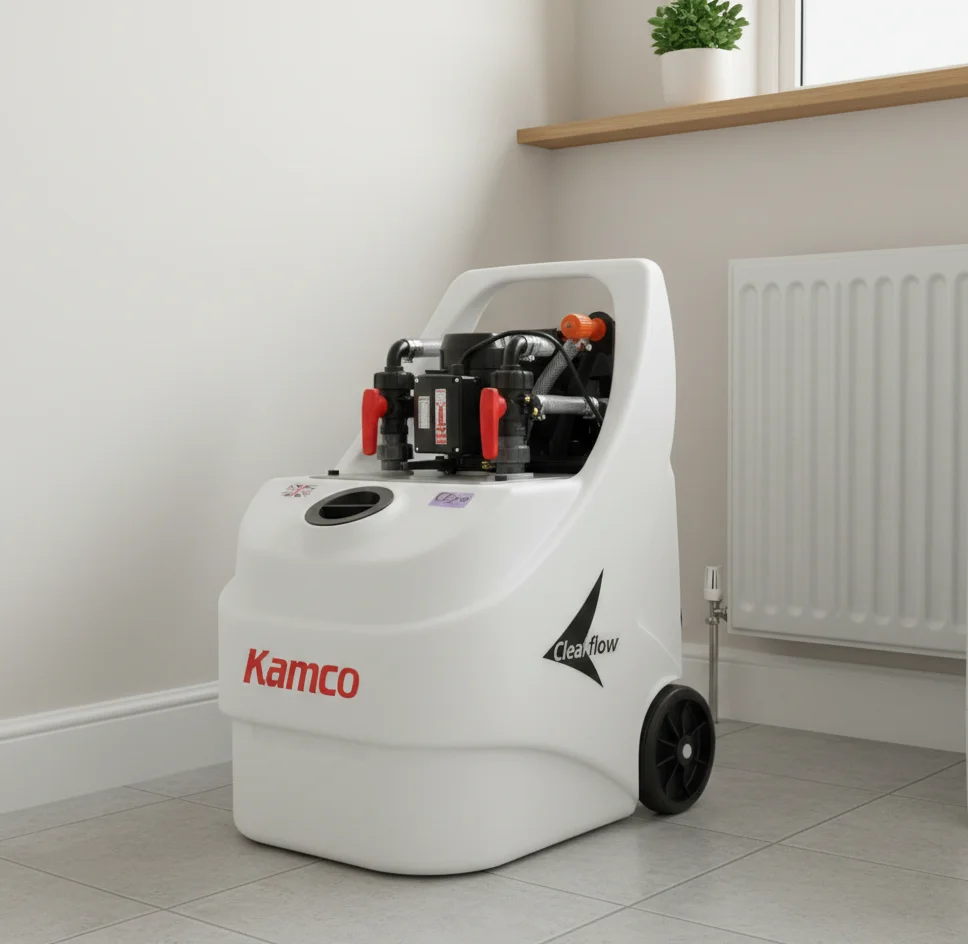
Several products and approaches can help manage scale or protect parts of a heating system. These include scale reducers, water softeners and magnetic system filters, but they do different jobs.
A scale reducer is intended to reduce the effects of scale formation under its specified operating conditions. A water softener treats the incoming water to reduce its hardness. A magnetic filter, meanwhile, is primarily designed to capture magnetite and other magnetic debris circulating through a central heating system. It is not a substitute for a dedicated hard-water treatment method.
The correct choice depends on the boiler, the incoming water, the existing system and the manufacturer’s instructions. No single device should be assumed to solve every water-quality problem.
4. Avoid unnecessary chemical treatments
Descaling chemicals and other treatments must be suitable for the appliance and used according to the relevant manufacturer’s guidance. Applying the wrong product or using an unsuitable procedure can cause further problems.
If you suspect scale inside the boiler, have the cause assessed before paying for a treatment. An engineer can explain whether cleaning, a component replacement or a different intervention is appropriate.
When Should You Consider Boiler Repair or Replacement?
The decision depends on the severity of the fault, the boiler’s age and condition, the availability of replacement parts and the likely cost of putting things right.
A targeted repair may make sense when the fault is clearly identified, and the affected component can be restored or replaced economically. Replacement may deserve consideration when the boiler has several developing faults, parts are difficult to obtain, or the repair cost is disproportionate to the condition of the appliance.
Before making a decision, ask for a clear explanation of the diagnosis and the work being recommended. If a replacement is proposed, it is reasonable to ask why repairing the existing boiler would not be suitable.
For homeowners comparing boiler repair options with a new system, the important point is to compare the likely total costs and expected outcomes, not simply the immediate price.
If recurring faults are affecting your heating or hot water, speak to We Heat London about the options available for your property.
What Should You Expect From a Professional Inspection?
A useful inspection starts with the symptoms rather than assuming that hard water is responsible for everything.
An engineer may ask when the problem began, whether it affects heating or hot water, and whether the boiler has displayed any fault codes. They can then carry out appropriate checks within the scope of the appliance’s servicing and diagnostic requirements.
Depending on the findings, the engineer may investigate:
- Boiler operating temperatures and performance.
- Hot-water flow and temperature stability.
- Relevant heat exchangers and water passages.
- System pressure and circulation where applicable.
- Evidence of sludge, debris or other water-quality issues.
- Whether the existing water treatment is suitable for the system.
The results should guide the recommendation. If the problem is a faulty sensor or restricted pipework, treating the whole system for limescale may not resolve it.
For a new boiler, discussing local water conditions before installation can also help you understand which protective measures are appropriate from the outset.
A Practical Example: Protecting a Combi Boiler in a Bromley Home
Consider a typical Bromley property with a combi boiler that has gradually developed inconsistent shower temperatures. The homeowner also notices that hot water seems weaker than it was a few months earlier.
It might be tempting to assume that limescale is the cause and immediately pay for descaling. However, an engineer would first investigate the symptoms and determine whether the issue relates to the plate heat exchanger, a flow restriction, a faulty component or another cause.
If scale is confirmed, the engineer can explain the available remedies and whether preventive water treatment would be worthwhile. If the fault has a different cause, the homeowner can avoid spending money on an unsuitable treatment.
This is why diagnosis matters. A measured approach can help protect the boiler without turning every performance problem into an expensive replacement recommendation.
Small Checks Can Help Prevent Bigger Problems
Hard water is a practical consideration for Bromley homeowners, but it does not mean that boiler trouble is inevitable. Understanding how limescale forms, recognising changes in performance and choosing suitable maintenance and water treatment measures can help you make better decisions about your heating system.
The most important step is to establish the actual cause of a problem before committing to repairs or replacement. We Heat London can help homeowners explore suitable heating solutions and understand the options available for their property.
Contact We Heat London to discuss your boiler concerns or request advice about a new installation.
Related articles


What type of boiler do you currently have?

Combi Boiler
Regular Boiler
System Boiler
Back Boiler
At a glance
Your boiler might be heating your home perfectly well today, but what is happening inside it? In areas with hard water, mineral deposits can gradually build up in parts of the heating system, sometimes affecting efficiency and contributing to faults long before a homeowner notices a problem.
For households in Bromley, understanding the connection between hard water, limescale and boiler performance can help prevent avoidable trouble. Limescale does not automatically mean your boiler is about to fail, but knowing what to look for can help you make sensible decisions about maintenance, repairs and replacement.
Why Is Bromley’s Water a Concern for Boilers?
Hard water contains higher concentrations of dissolved minerals, particularly calcium and magnesium. These minerals are naturally present in water that passes through certain types of rock before reaching homes.
When hard water is heated, some of these minerals can separate and form limescale. You might recognise it as the white, chalky deposit around taps, inside kettles or on shower screens. However, the deposits that form inside a boiler are harder to see and can be more troublesome if they accumulate in the wrong places.
Bromley and the wider South East have areas where hard water is a familiar household issue. The precise hardness level can vary depending on the local supply, so it is worth checking your water supplier’s information for your postcode rather than assuming every property receives water of exactly the same hardness.
In a boiler, the main concern is what happens when mineral deposits begin to interfere with heat transfer or restrict the movement of water. The effect depends on the boiler design, the condition of the system and how much scale has accumulated.
How Does Limescale Affect a Boiler?
Limescale can act as an insulating layer on heat-transfer surfaces. When this happens, heat may not pass into the water as effectively as intended. The boiler may need to work harder to achieve the required temperature, and some components can experience additional thermal stress.
In a combi boiler, the plate heat exchanger is particularly relevant because it transfers heat from the primary heating circuit to the domestic hot water supply. Mineral deposits can restrict the narrow passages inside this component, potentially reducing hot-water performance.
The effects can include:
- Reduced hot-water flow: Deposits may restrict water movement through affected components.
- Inconsistent temperatures: Hot water may fluctuate between warm and hot, depending on the underlying fault.
- Unusual noises: Kettling or rumbling can sometimes occur when localised overheating develops around restricted heat-transfer surfaces.
- Increased energy consumption: Poor heat transfer or an inefficiently operating system may use more energy to deliver the same level of comfort.
- Component problems: Continued overheating or restricted flow can contribute to wear, although the actual cause needs to be established.
It is important to remember that these symptoms are not proof of limescale. Air in the system, faulty sensors, circulation problems, incorrect settings and other component failures can produce similar behaviour.
What Warning Signs Should Homeowners Look For?
The earliest signs of scale-related trouble are often subtle. You may notice that the shower takes longer to reach a comfortable temperature, or that the hot-water flow has become weaker than it used to be.
Other warning signs include:
- Hot water that repeatedly changes temperature during use.
- A boiler that makes a new clicking, banging, whistling or rumbling noise.
- Heating or hot water that works intermittently.
- A noticeable change in hot-water performance despite normal household usage.
- Repeated fault codes or shutdowns that require investigation.
A boiler making a kettling noise does not necessarily have a limescale problem. Similarly, a drop in hot-water flow may originate in a tap, shower valve or pipework rather than the boiler itself.
If your boiler repeatedly loses performance, arranging a professional inspection can help identify the cause before you spend money on the wrong solution.
Contact We Heat London for advice about boiler symptoms and suitable next steps.
Can Hard Water Shorten Your Boiler’s Working Life?
It can contribute to premature wear in certain circumstances, but hard water alone does not determine how long a boiler will last.
The effect depends on several factors, including the amount of scale formation, the boiler’s design, the condition of its components, the quality of the installation and the maintenance it receives.
For example, a boiler that develops scale-related restrictions may experience repeated overheating or reduced heat transfer. If the underlying issue remains unresolved, the affected component may eventually need cleaning or replacement.
However, it would be misleading to suggest that every boiler in a hard-water area will suffer serious damage. Many systems operate for years without major scale-related failures, particularly when they are installed correctly, maintained appropriately and supplied with suitable water treatment where necessary.
The key is to respond to changes in performance rather than waiting for a complete breakdown.
Which Boiler Components Are Most Vulnerable to Limescale?
Not every part of a boiler is equally exposed to scale formation. The risk depends on the water flowing through the component and the temperatures involved.
| Boiler component | Possible effect of limescale | What a homeowner might notice |
| Plate heat exchanger | Restricted passages and reduced heat transfer | Weak or inconsistent hot water |
| Primary heat exchanger | Deposits may affect heat transfer and contribute to localised overheating | Unusual noises or reduced performance |
| Water-carrying valves and passages | Restrictions may develop in affected areas | Changes in flow or temperature |
| Hot-water pipework and fittings | Deposits may build up in susceptible sections | Reduced flow from individual outlets |
A qualified heating engineer can assess whether a component is scaled, damaged or affected by a different problem. This distinction matters because cleaning a component that has already deteriorated may not provide a lasting solution.
What Can You Do to Protect Your Boiler From Hard Water?
The most effective approach is to identify the water conditions, maintain the heating system properly and choose treatment measures that suit the property.
1. Check your local water hardness
Your water supplier may publish hardness information by postcode. This provides a useful starting point for understanding whether limescale prevention deserves particular attention.
A visible build-up on taps and kettles can also indicate hard water, although it cannot tell you exactly what is happening inside your boiler.
2. Keep up with servicing
Regular servicing allows an appropriately qualified engineer to inspect the boiler, check its operation and identify developing issues where possible.
A service does not guarantee that limescale will never form, but it can help distinguish normal operation from symptoms that need further investigation.
3. Ask whether water treatment is appropriate
Several products and approaches can help manage scale or protect parts of a heating system. These include scale reducers, water softeners and magnetic system filters, but they do different jobs.
A scale reducer is intended to reduce the effects of scale formation under its specified operating conditions. A water softener treats the incoming water to reduce its hardness. A magnetic filter, meanwhile, is primarily designed to capture magnetite and other magnetic debris circulating through a central heating system. It is not a substitute for a dedicated hard-water treatment method.
The correct choice depends on the boiler, the incoming water, the existing system and the manufacturer’s instructions. No single device should be assumed to solve every water-quality problem.
4. Avoid unnecessary chemical treatments
Descaling chemicals and other treatments must be suitable for the appliance and used according to the relevant manufacturer’s guidance. Applying the wrong product or using an unsuitable procedure can cause further problems.
If you suspect scale inside the boiler, have the cause assessed before paying for a treatment. An engineer can explain whether cleaning, a component replacement or a different intervention is appropriate.
When Should You Consider Boiler Repair or Replacement?
The decision depends on the severity of the fault, the boiler’s age and condition, the availability of replacement parts and the likely cost of putting things right.
A targeted repair may make sense when the fault is clearly identified, and the affected component can be restored or replaced economically. Replacement may deserve consideration when the boiler has several developing faults, parts are difficult to obtain, or the repair cost is disproportionate to the condition of the appliance.
Before making a decision, ask for a clear explanation of the diagnosis and the work being recommended. If a replacement is proposed, it is reasonable to ask why repairing the existing boiler would not be suitable.
For homeowners comparing boiler repair options with a new system, the important point is to compare the likely total costs and expected outcomes, not simply the immediate price.
If recurring faults are affecting your heating or hot water, speak to We Heat London about the options available for your property.
What Should You Expect From a Professional Inspection?
A useful inspection starts with the symptoms rather than assuming that hard water is responsible for everything.
An engineer may ask when the problem began, whether it affects heating or hot water, and whether the boiler has displayed any fault codes. They can then carry out appropriate checks within the scope of the appliance’s servicing and diagnostic requirements.
Depending on the findings, the engineer may investigate:
- Boiler operating temperatures and performance.
- Hot-water flow and temperature stability.
- Relevant heat exchangers and water passages.
- System pressure and circulation where applicable.
- Evidence of sludge, debris or other water-quality issues.
- Whether the existing water treatment is suitable for the system.
The results should guide the recommendation. If the problem is a faulty sensor or restricted pipework, treating the whole system for limescale may not resolve it.
For a new boiler, discussing local water conditions before installation can also help you understand which protective measures are appropriate from the outset.
A Practical Example: Protecting a Combi Boiler in a Bromley Home
Consider a typical Bromley property with a combi boiler that has gradually developed inconsistent shower temperatures. The homeowner also notices that hot water seems weaker than it was a few months earlier.
It might be tempting to assume that limescale is the cause and immediately pay for descaling. However, an engineer would first investigate the symptoms and determine whether the issue relates to the plate heat exchanger, a flow restriction, a faulty component or another cause.
If scale is confirmed, the engineer can explain the available remedies and whether preventive water treatment would be worthwhile. If the fault has a different cause, the homeowner can avoid spending money on an unsuitable treatment.
This is why diagnosis matters. A measured approach can help protect the boiler without turning every performance problem into an expensive replacement recommendation.
Small Checks Can Help Prevent Bigger Problems
Hard water is a practical consideration for Bromley homeowners, but it does not mean that boiler trouble is inevitable. Understanding how limescale forms, recognising changes in performance and choosing suitable maintenance and water treatment measures can help you make better decisions about your heating system.
The most important step is to establish the actual cause of a problem before committing to repairs or replacement. We Heat London can help homeowners explore suitable heating solutions and understand the options available for their property.
Contact We Heat London to discuss your boiler concerns or request advice about a new installation.
Related articles
What type of boiler do you currently have?
Combi Boiler
Regular Boiler
System Boiler
Back Boiler